Hugo Schulz · 17 October 2026
Ex-Insurance Adjuster Launches Blockchain-Based Mutual Aid Fund for Climate Disaster Victims
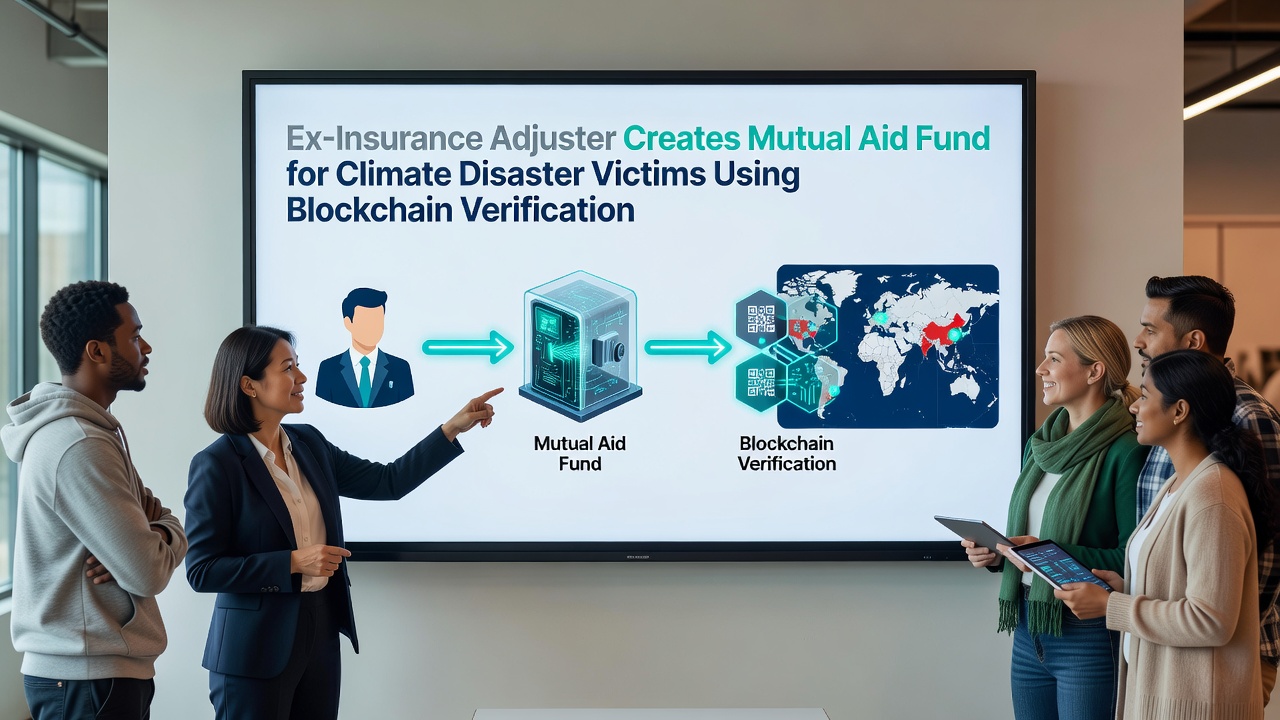
Jordan Hale left a decade-long career as an insurance adjuster in 2024 after handling claims from successive hurricanes along the Gulf Coast, and by early 2025 Hale had registered a nonprofit that routes donations through a public blockchain ledger to verify recipient eligibility and fund distribution for climate disaster survivors.
The system records each application with timestamps and geographic data that any participant can audit, which eliminates repeated manual checks that traditional insurers often require after events like floods or wildfires. Donors see exactly where contributions land because smart contracts release funds only after independent verifiers confirm identity and damage through uploaded documents and satellite imagery cross-checked against public records.
Blockchain Mechanics in Practice
Participants submit claims via a mobile interface that hashes personal details and attaches proof of residence or business location. Network nodes run by partner nonprofits and academic observers validate the entries before the ledger finalizes them, and once confirmed the contracts distribute micro-payments in stablecoin form that recipients convert locally without intermediary banks taking cuts. Observers note that this process cuts administrative overhead compared with conventional aid channels that rely on layered approvals and paper trails.
Data from the first twelve months of operation shows the fund processed assistance for more than 3,400 households across three major disaster zones, with average disbursement times under seventy-two hours once verification cleared. The ledger itself remains open for public review at any time, and researchers at several universities have begun analyzing transaction patterns to assess how quickly capital reaches affected communities versus traditional grant programs.
Expansion During 2026 Events
By October 2026 the platform had integrated additional data feeds from national weather services and regional emergency management agencies, allowing faster matching of claims to declared disaster areas. Wildfires in the Pacific Northwest and flooding along the Atlantic seaboard triggered simultaneous claim surges, yet the automated verification queue maintained throughput because multiple validator groups operated in parallel across different time zones. Hale's team added a feature that lets local community organizations act as on-the-ground confirmers, which further speeds the process while keeping every step visible on the chain.
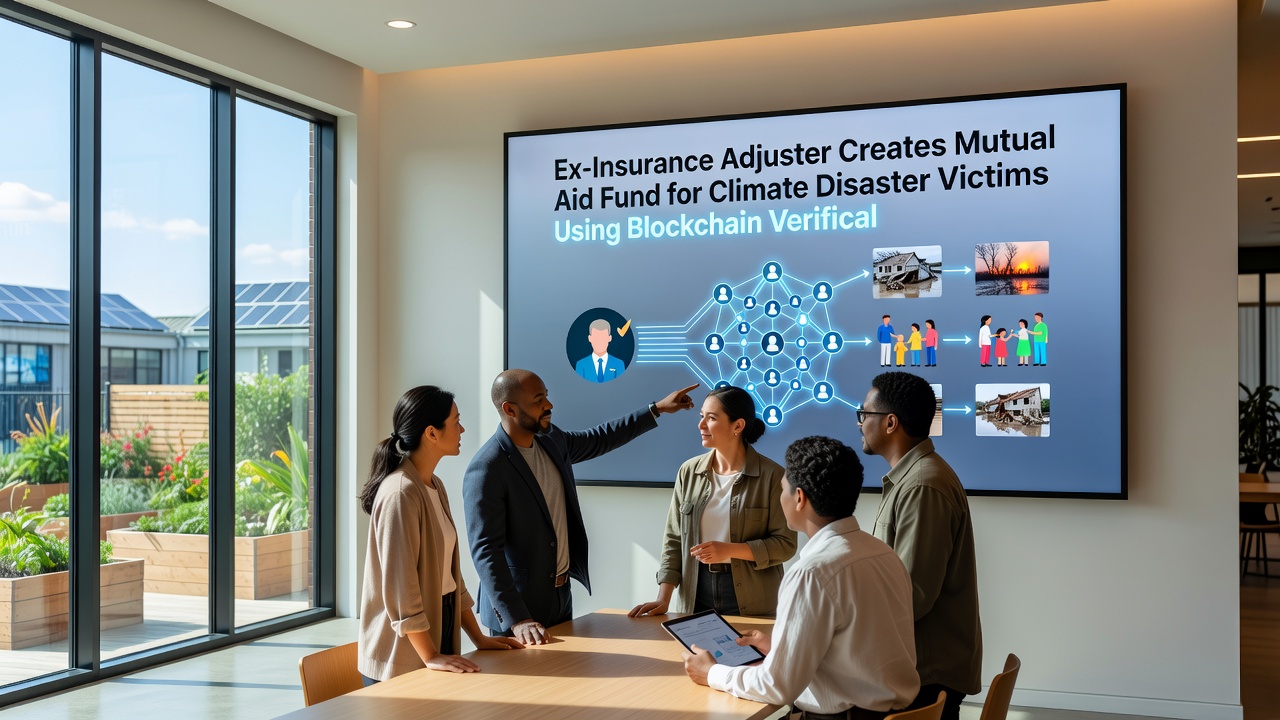
One case involved a small business owner in coastal Louisiana whose inventory loss documentation cleared within forty-eight hours after a volunteer verifier uploaded timestamped photos that matched the blockchain record. The owner received stablecoin transfers that covered immediate restocking costs before conventional insurance payouts arrived weeks later. Similar stories surfaced in Oregon where timber workers displaced by fire used the fund to secure temporary housing while waiting for federal programs to activate.
Partnerships and Data Sources
Collaboration with regional mapping agencies supplies the satellite layers used for damage cross-verification, while academic partners contribute open-source code that strengthens the smart contract logic against tampering. A European Environment Agency report on climate-related losses highlights the growing gap between insured and uninsured damages, which the blockchain fund targets by focusing exclusively on under-covered populations. Separate analysis from Australian government climate services tracks similar patterns in the Southern Hemisphere and provides comparative benchmarks for how quickly distributed ledgers can scale during concurrent events.
The fund maintains a reserve pool funded by recurring small donations and occasional corporate matching programs, and quarterly public reports detail both inflows and outflows so contributors can track utilization rates. Because the blockchain timestamps every release, auditors can reconstruct entire distribution histories without requesting internal documents from the nonprofit itself.
Challenges Encountered and Adjustments Made
Early iterations faced connectivity issues in areas where cellular networks failed after storms, so the developers introduced offline claim queuing that syncs once service returns. Privacy concerns prompted the addition of zero-knowledge proofs that let verifiers confirm eligibility without exposing full personal records on the public ledger. Those who've studied the rollout note that transaction fees remain low because the network uses a proof-of-stake model rather than energy-intensive mining.
Regulatory discussions continue with agencies that oversee charitable fundraising, and the nonprofit publishes compliance filings alongside the blockchain data so both traditional oversight bodies and distributed observers can review the same information. Growth has stayed measured because the team caps active campaigns to match available validator capacity and avoid backlogs during peak disaster seasons.
Conclusion
The initiative demonstrates how an individual with insurance industry experience can repurpose familiar verification skills into a transparent distribution network that operates alongside existing relief systems. Transaction records from 2025 through late 2026 show consistent delivery metrics even as claim volumes fluctuate with the intensity of climate events. Continued development focuses on expanding validator networks and refining data integration from additional meteorological sources so the ledger keeps pace with future disaster seasons.