Jakob Frank · 31 October 2026
Environmental Engineer Develops Low-Cost Sensors for Community Air Quality Monitoring Initiatives
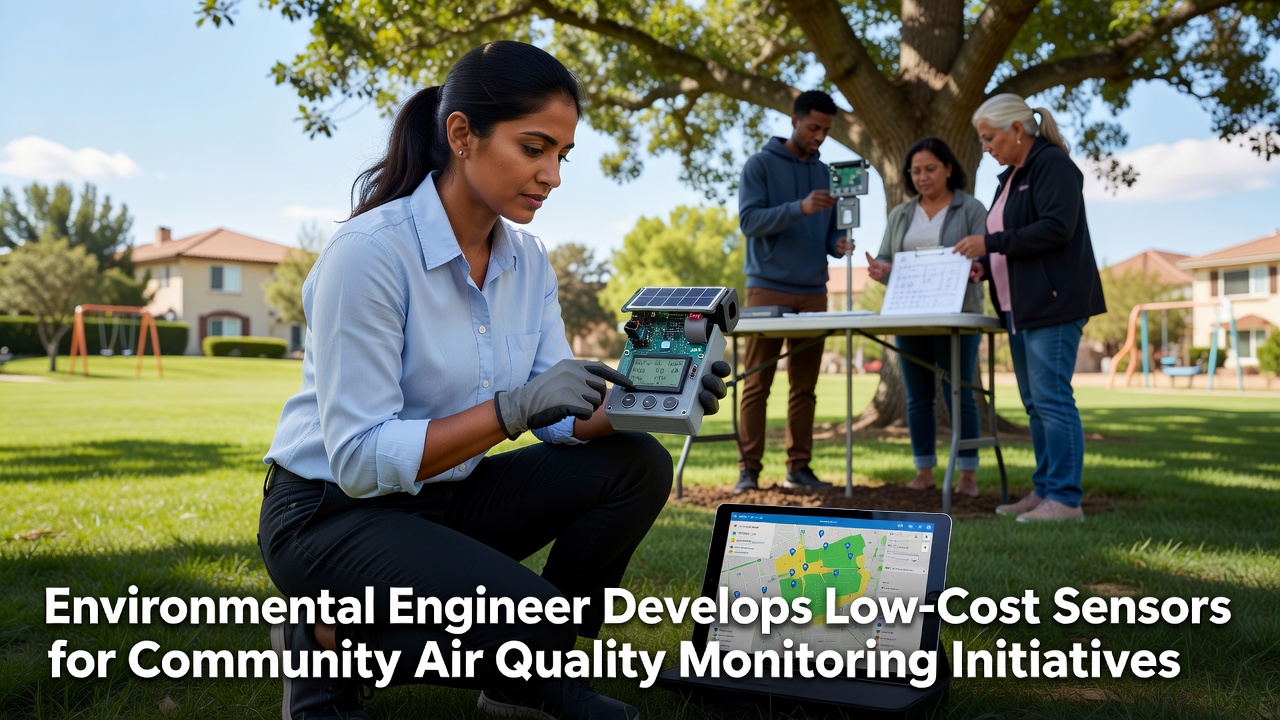
Communities across urban and rural areas have faced persistent challenges tracking airborne pollutants, and one environmental engineer addressed this gap by creating affordable sensor technology that local groups can deploy without specialized equipment or large budgets. The project centers on devices that measure particulate matter, nitrogen dioxide, and ozone levels at costs far below commercial alternatives, allowing residents to collect real-time data in neighborhoods previously underserved by official monitoring stations.
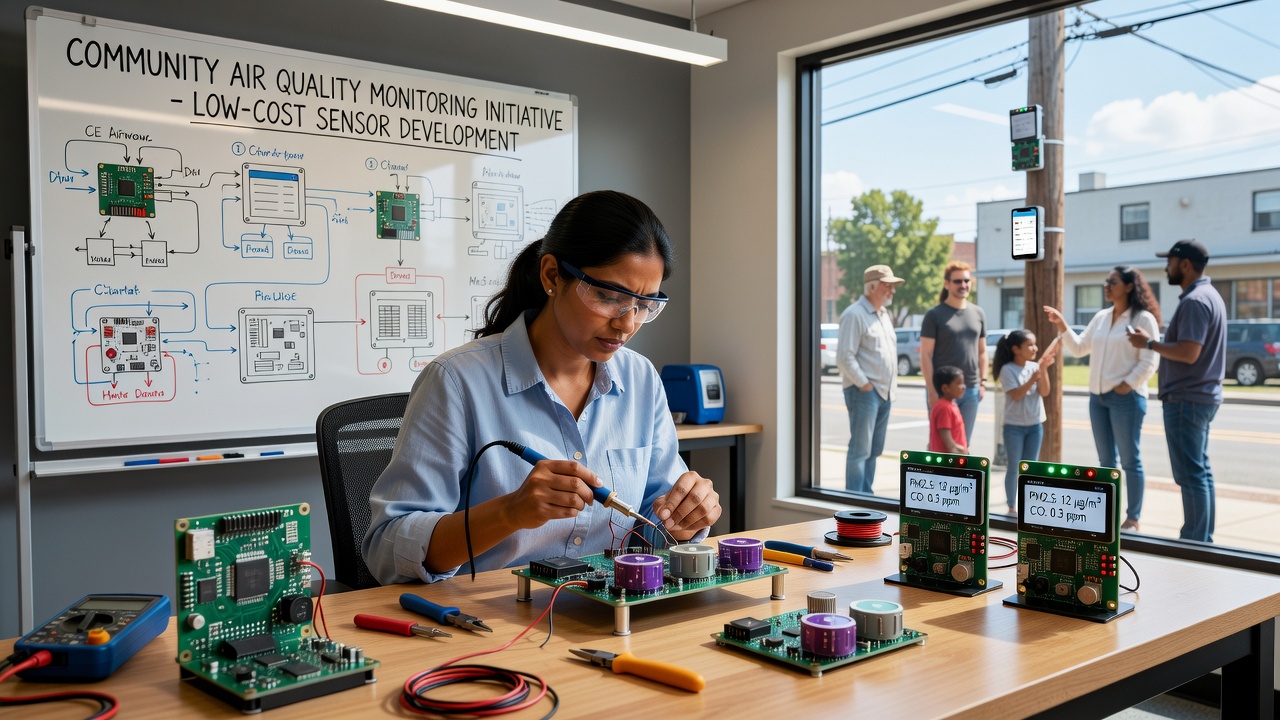
Data from similar low-cost sensor networks shows that communities gain access to granular readings when traditional regulatory systems operate at broader scales, according to figures from the U.S. Environmental Protection Agency. Those readings help identify pollution hotspots near highways, industrial sites, and construction zones where standard stations might miss localized spikes. The engineer integrated open-source microcontrollers with electrochemical and optical sensors, keeping unit costs under fifty dollars while maintaining calibration standards that align with reference instruments used by government agencies.
Technical Design and Deployment Approach
Development began with selection of durable components resistant to humidity and temperature fluctuations common in field conditions, and the resulting prototypes underwent testing against established benchmarks from the European Environment Agency. Each unit transmits readings via cellular or Wi-Fi connections to a central dashboard accessible through web browsers or mobile applications, enabling residents to view maps updated every few minutes. Calibration protocols involve periodic co-location with certified monitors, a step that researchers have found improves accuracy over time when communities follow consistent procedures.
Deployment started in several pilot locations where volunteer teams installed sensors on rooftops, lampposts, and school buildings, and the network expanded to include over two hundred devices by early 2026. Participants receive training on basic maintenance such as battery replacement and dust filter cleaning, which keeps ongoing operational expenses minimal compared with professional service contracts. The system stores historical data in public repositories, allowing analysts to examine trends across seasons and correlate readings with traffic patterns or weather events.
Community Integration and Data Utilization
Local organizations adopted the sensors to supplement official reports, and one neighborhood association in a mid-sized city documented elevated particulate levels during evening rush hours that prompted discussions with municipal planners about traffic rerouting options. Schools used the data to adjust outdoor activity schedules on high-pollution days, while public health departments cross-referenced sensor outputs with hospital admission records to explore respiratory health correlations. The approach draws on methods validated in studies published by the World Health Organization, which emphasize citizen involvement in environmental surveillance.
October 2026 marked the rollout of an updated firmware version that added humidity compensation algorithms, improving performance in coastal and tropical regions where earlier models showed drift. Partnerships with university laboratories provided validation datasets, and results indicated that the low-cost units achieved correlation coefficients above 0.85 with reference-grade equipment under varied conditions. Funding came through a combination of small grants from environmental foundations and crowdfunding campaigns organized by participating communities, keeping the project independent of large corporate sponsorship.
Broader Applications and Ongoing Refinements
Similar initiatives have appeared in other regions, where engineers adapted the core design for wildfire smoke monitoring in western states and industrial emission tracking near ports in coastal areas. The open hardware specifications allow modifications such as additional gas sensors or solar power attachments, and documentation hosted on public repositories encourages replication by technicians without advanced degrees. Observers note that data sharing agreements among neighboring towns have created regional maps that reveal pollution transport patterns across municipal boundaries.
Maintenance challenges include occasional sensor fouling in dusty environments, yet communities addressed this through scheduled rotation schedules and shared spare parts inventories. Software updates delivered remotely have extended device lifespan, and user forums facilitate troubleshooting among participants located in different climates. The project continues to collect performance metrics that feed into iterative improvements, with the next hardware revision scheduled for testing in the following year.
Conclusion
The low-cost sensor initiative demonstrates how targeted engineering can expand air quality information access beyond centralized networks, and communities that adopted the technology now maintain continuous local datasets previously unavailable. Ongoing refinements based on field experience keep the system responsive to diverse environmental conditions, while public data repositories support both immediate decision-making and longer-term research into pollution sources and mitigation strategies.